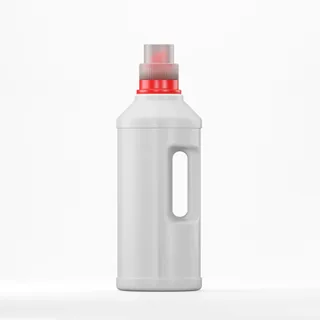
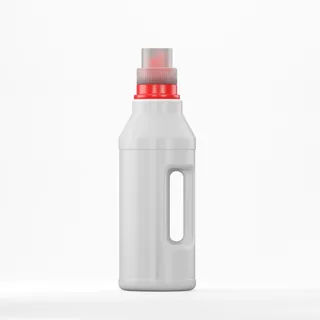
Neck finish and cap compatibility
Updated: 30.09.2026
For bottles and jars, the cap, pump or sprayer must match the neck finish (the thread design), not just the diameter. The most common mistake is buying a "28 mm" cap for a "28 mm" bottle and finding that it does not screw on or does not seal. This guide explains the common standards and how to check compatibility.
Diameter is not enough
The number in the name (24, 28, 38 mm) is a nominal diameter. It says nothing about:
- the thread profile: the shape of the thread, the pitch (distance between threads) and the number of thread starts;
- the number of turns: how far the cap must be turned to close;
- the neck height: the distance from the lip to the shoulder or to the support ring;
- the tamper-evident bead: the position and shape of the ledge that holds the cap's tamper band, which breaks on first opening;
- the inner diameter and the sealing type: liner, sealing lip or inner plug.
Two parts can have the same nominal diameter and differ in any of these. This is why compatibility is checked against the full standard, not the diameter.
Common standards
| Name | System | What it means | Typical uses |
|---|---|---|---|
| PCO 1810 | PET bottle neck standard | 28 mm neck, the taller version long used in the beverage industry | water, drinks, liquids in PET bottles |
| PCO 1881 | PET bottle neck standard | 28 mm neck, shorter and lighter than PCO 1810 | water, drinks, liquids in PET bottles |
| 28/410 | GPI/SPI system (diameter/style code) | 28 mm nominal outer thread diameter, style 410: about one and a half turns of thread | cosmetics, detergents, sprayers and trigger sprayers |
| 24/410 | GPI/SPI system | 24 mm, same 410 style | lotion and liquid soap pumps, flip-top caps, small sprayers |
| GL18 | DIN thread for laboratory and pharmacy containers | 18 mm thread with a DIN profile | small pharmacy and laboratory bottles, droppers |
| 38 mm | generic name | may refer to several different systems (for example 38/400, or 38 mm with two or three thread starts) | jars, wide-mouth bottles, juices and dairy |
The exact standard of each bottle, jar, cap or accessory is stated on the product page.
How to read GPI/SPI codes (for example 28/410)
Codes such as "28/410" come from a system widely used for cosmetic, pharmaceutical and household packaging:
- the first number (28) is the nominal outer thread diameter in millimetres;
- the second number (410) is the finish style, which sets the height and number of turns.
| Style | Thread | Notes |
|---|---|---|
| 400 | about one turn | short neck, low cap |
| 410 | about one and a half turns | the most common for pumps and trigger sprayers |
| 415 | about two turns | tall neck, tall cap |
The practical consequence: a 28/400 cap and a 28/410 bottle have the same diameter, but the 400 cap is lower. It may screw on partly but leave part of the thread exposed and seal unreliably. A 28/415 cap on a 28/410 neck may not reach the lip of the neck, and so may not seal.
Why PCO 1810 and PCO 1881 are not interchangeable
Both are 28 mm PET bottle necks, but PCO 1881 is shorter and has a different thread and tamper band geometry. A cap designed for one standard is not guaranteed to work on the other: it may not seal, may not break the tamper band properly, or may loosen under pressure. Choose the cap for exactly the bottle's standard.
Likewise, a 28 mm PCO neck and a 28/410 neck are completely different systems: their caps cannot be used in place of each other.
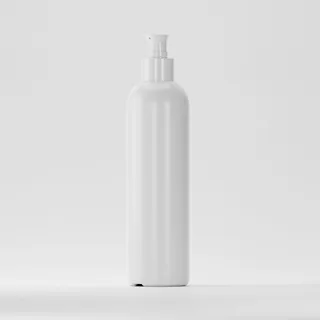
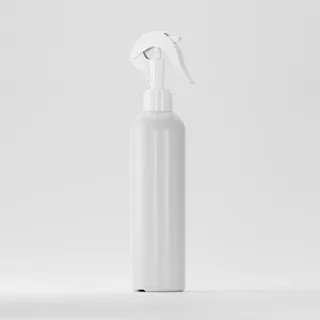
Pumps, sprayers and trigger sprayers
For accessories with a dip tube, also check:
- the thread standard (for example 24/410 or 28/410);
- the dip tube length: the tube should reach close to the bottom of the bottle without bending; on some products the tube is cut to length, on others it is fixed;
- the inner diameter of the neck: some pumps have a part that goes into the neck and must pass through the opening;
- compatibility with your product: liquid viscosity and the chemical compatibility of the seals are confirmed on the accessory's technical data sheet.
How to check compatibility
- Read the standard on the product page, for both the bottle and the cap or accessory. The codes must be identical (for example 28/410 with 28/410, PCO 1881 with PCO 1881).
- If you already have bottles from another supplier, ask them for the neck standard or the technical drawing. Names like "28 neck" or "standard" are not enough.
- Measure, if you have no documentation: with a calliper, measure the outer diameter over the thread, the diameter at the root of the thread and the neck height, and count the thread turns. Send us the values with a side-on photo of the neck.
- Test with a sample before a large order: screw on the cap with the force normally used, fill the bottle with your actual product, turn it upside down and leave it for at least a few hours, then check for leaks. For carbonated, hot or chemically aggressive products, compatibility is confirmed on the technical data sheet of each product.
- For automatic lines, also check the dimensions needed for the capping machine and the line guides (for example whether there is a support ring below the thread and its diameter).
In short
- Nominal diameter is only the first criterion. The full standard decides compatibility.
- PCO 1810, PCO 1881 and 28/410 are all "28 mm" but are not interchangeable.
- In GPI/SPI codes, the second number (400, 410, 415) matters as much as the first.
- "38 mm" without a standard is not a complete specification.
- Test with a sample before ordering large quantities.
If you are not sure which cap fits, write to [email protected] with the bottle code or the neck measurements and we will tell you which options in our range are compatible.